
There are moments in history when silence is a luxury humanity can no longer afford. When an idea becomes so familiar, so normalized, that no one stops to question what it was before it was dressed up as progress. And sometimes the only way to understand the fruit we’re biting into today is to expose the root system that fed it.
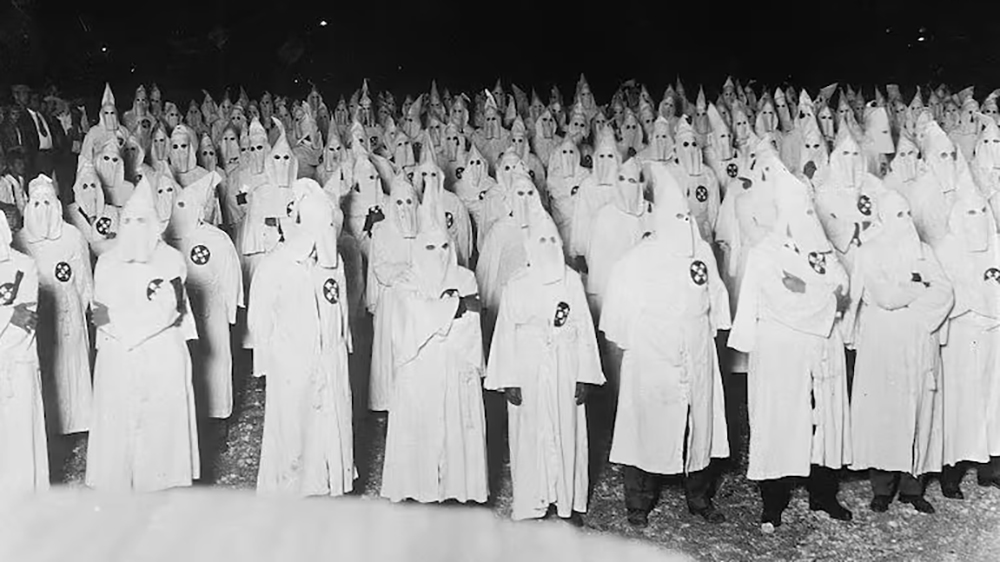
In the early twentieth century, a man named Lothrop Stoddard sat at the intersection of racial ideology, American elitism, and what would become one of the darkest engines of human oppression. Most people today don’t recognize his name, but they’ve lived downstream of his influence. Stoddard wasn’t a fringe extremist shouting into the void. He was a Harvard-trained political theorist, a bestselling author, a board member of Margaret Sanger’s organization [which later became Planned Parenthood] and, disturbingly, an “exalted cyclops” in the Massachusetts chapter of the Ku Klux Klan.

He wasn’t dismissed by his era as a crank. He was embraced.
His writings didn’t merely circulate in academic halls. They were recommended reading in Nazi youth schools. When his book The Menace of the Under Man was translated into German at the request of the Third Reich, the title was reframed as Der Untermensch, “The Subhuman,” a word the Nazi regime weaponized to strip entire populations of human worth.
In 1939, Stoddard traveled to Germany as an honored guest of the regime. He met with Heinrich Himmler, and records indicate he had a brief personal meeting with Adolf Hitler himself. During his visit, he observed, and directly influenced, a eugenics court that approved the forced sterilization of Jewish citizens. This wasn’t incidental contact with evil; it was ideological collaboration with it.

Most people today have no idea that such figures helped construct the moral scaffolding for systems that still influence modern thought. And yet these connections aren’t taught in schools, rarely surface in public discourse, and vanish entirely from the polished narratives surrounding certain institutions.
It’s easier to market progress when people forget the past.
But if history teaches us anything, it’s that ideas don’t die. They evolve. They shed language that offends and adopt language that appeals. What begins as the classification of “undesirable” populations becomes, over time, the normalization of selective value; who is worthy of life, who is not, and who gets to decide.

This is why the stakes are spiritual, not merely political. The logic of eugenics didn’t only target bodies; it targeted identity itself. It attempted to overwrite the truth that every human being is made in the image of God.
“God created mankind in His own image” -Genesis 1:27
Every ideology built on hierarchy of worth is a direct contradiction of that foundation.
And yet the modern world still rewards sanitized versions of these ideas. When human value becomes a sliding scale, when convenience overrides conscience, when cultural belonging matters more than truth, we repeat history — not because we intend to, but because we refuse to confront what shaped us.
That’s why awakening begins with revelation. Not outrage. Not blame. Revelation. The kind that interrupts assumptions and forces a deeper question: Who told us this was progress? And why did we believe them?

To examine the roots of any movement isn’t to condemn everyone connected to it. It’s to liberate the present from the blind spots of the past. Many people hold their beliefs [political, medical, or spiritual], because challenging them would risk community, identity, or family ties. And yet truth has always asked more of us than comfort. Truth calls us out of inherited narratives and into clarity.
This is not an attack on individuals but an illumination of ideology. A reminder that systems built on dehumanization, no matter how modern their packaging, cannot bear good fruit. A call to discernment in an age that rewards distraction. And a warning that ideas once embraced by tyrants don’t lose their danger simply because the language has softened.
Truth doesn’t need our permission to be true. It only needs our willingness to see.